Securing an effective pest control service in Frisco requires understanding how North Texas Houston Black clay shifts residential concrete slab foundations, opening hairline perimeter fissures beneath brick weep screeds. Rising summer temperatures driving past 100 degrees Fahrenheit force subterranean insects, turf pests, and foraging rodents directly out of desiccated soils into climate-controlled interior wall voids.
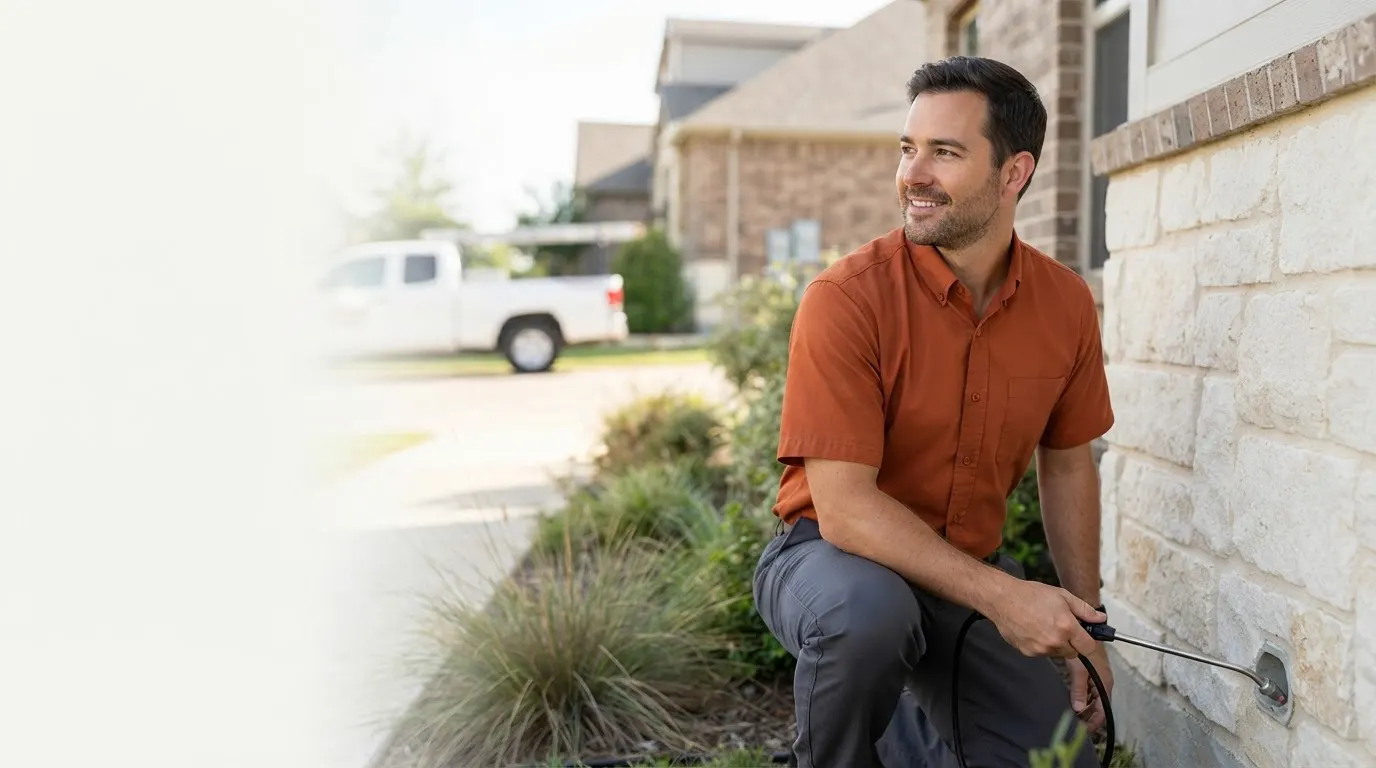
Pest Control Service in Frisco is an analytical biological defense and physical perimeter exclusion protocol that systematically neutralizes structural wood-destroying organisms, seasonal rodent populations, and crawling insect colonies across residential properties in Collin and Denton Counties.
Every service reflects the same meticulous attention to detail, whether it's a single job or a larger pest control service project across Frisco.
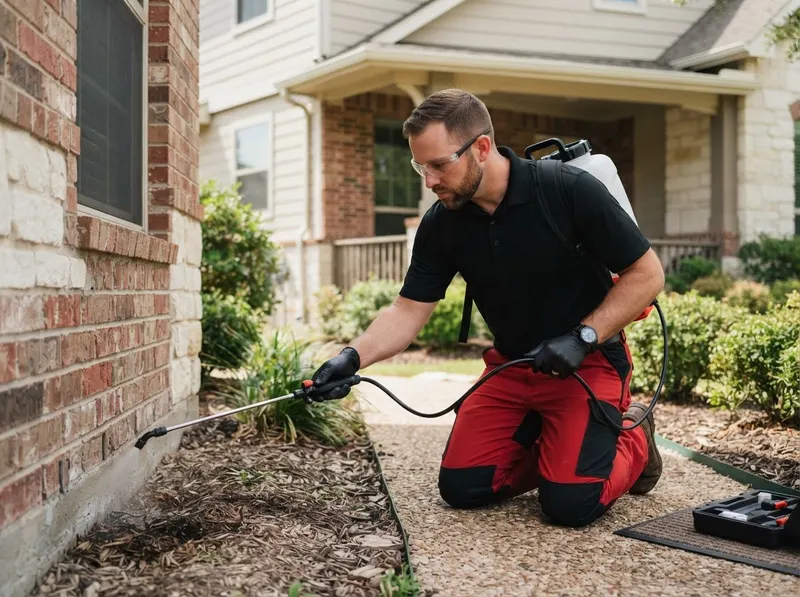
Quarterly exterior perimeter defense establishes a durable protective chemical barrier against American roaches, field crickets, silverfish, and wandering ground spiders. Licensed technicians methodically inspect and clear debris from foundation weep screeds, sweep cobwebs from exterior soffits and window lintels, and apply targeted micro-encapsulated liquid formulations 3 feet up the exterior brick and 3 feet out onto surrounding soil. Treatments focus entirely on intercepting active pest runs before organisms breach the structural thermal envelope, removing the necessity of broad chemical dispersal across living-room baseboards or bedroom carpets. Every service visit concludes with an itemized inspection report detailing local moisture anomalies, mulch-to-foundation contacts, and recommended mechanical repairs.
Get a quote →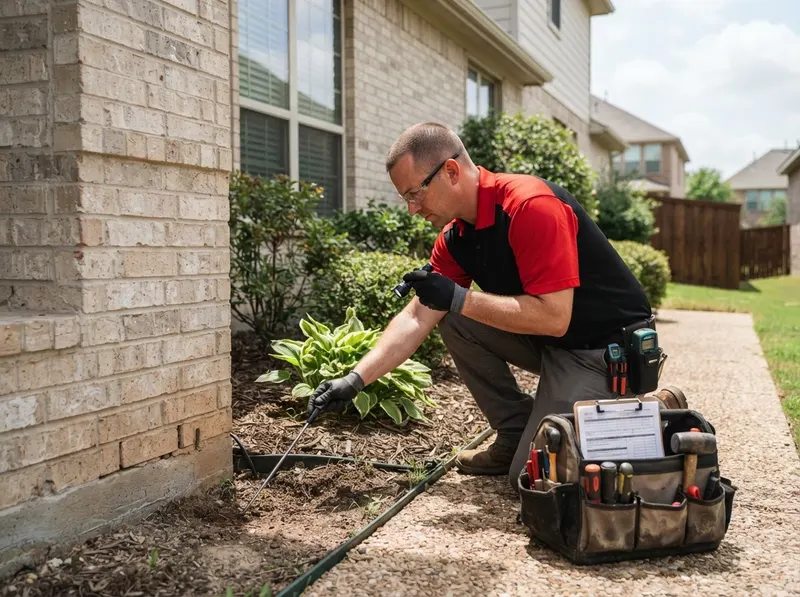
Targeted visual, acoustic, and thermal diagnostics identify subterranean termite infestations before structural framing sustains irreversible degradation. Technicians evaluate residential concrete stem walls, expansion joints, detached patio slabs, and plumbing blockouts for the presence of exploratory mud shelter tubes, frass, and discarded alate swarmer wings. Properties receive precise structural vulnerability mapping that highlights areas where high soil levels or garden mulch bridge the inspection gap below brick weep holes. Inspections adhere strictly to Texas structural pest control reporting standards, furnishing homeowners and prospective purchasers with actionable condition reports, photographic evidence, and prescriptive treatment options that isolate colony activity without invasive wall demising.
Get a quote →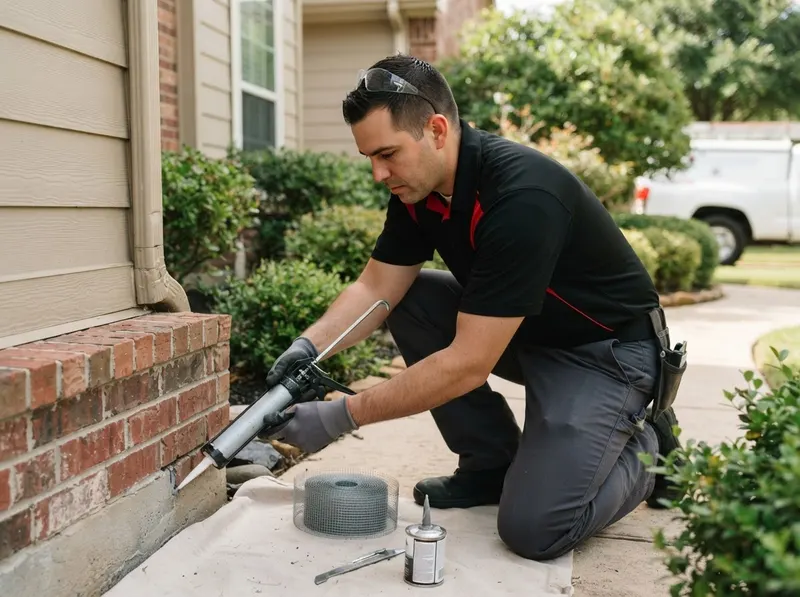
Complete attic clearance, biological sanitization, and permanent architectural exclusion eliminate black roof rats (Rattus rattus) and house mice (Mus musculus). Technicians run diagnostic attic inspections to trace urine markers, gnawed wiring, damaged ductwork, and compressed fiberglass insulation pathways. Specialized exclusion teams seal high-risk structural entryways including open roof returns, fascia gaps, uncapped ridge vents, attic dormer corners, and ground-level weep holes using industrial 1/4-inch galvanized steel hardware cloth, high-density exterior elastomeric sealants, and metal flashing. Interior mechanical snap-trap arrays are established inside attic voids to eliminate lingering rodents without relying on interior toxic anticoagulant poisons that cause foul carcass decay inside wall cavities.
Get a quote →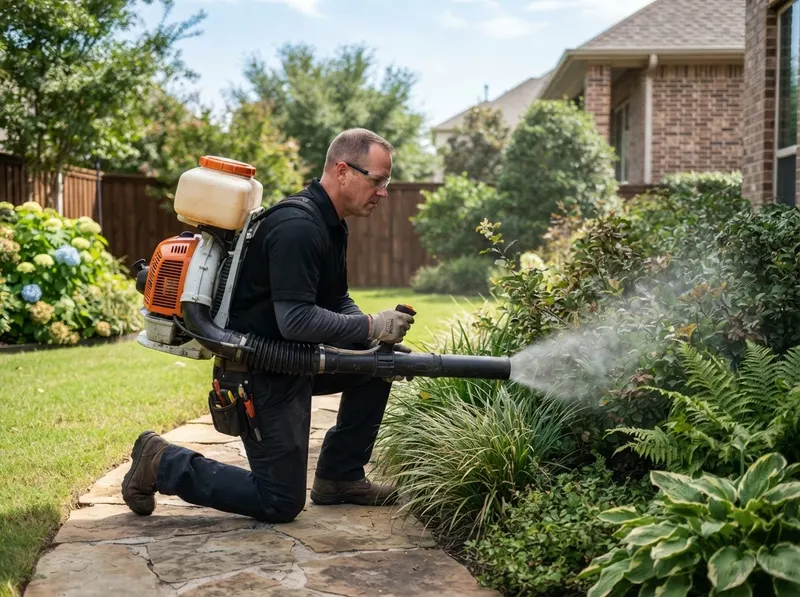
Systematic yard suppression breaks the rapid developmental lifecycle of northern house mosquitoes (Culex pipiens) and Asian tiger mosquitoes (Aedes albopictus). Technicians evaluate properties to identify micro-reservoirs of stagnant water such as clogged gutter sections, French drain basins, air conditioning condensation lines, and over-irrigated ornamental planter saucers. Service combines the application of bacterial Bacillus thuringiensis israelensis (BTI) larvicides to non-draining water features with precision ultra-low volume (ULV) barrier sprays directed at the undersides of broadleaf shrubs, groundcovers, dense hedgerows, and sheltered eave overhangs where adult mosquitoes harbor during daylight hours. Regular monthly applications from March through October significantly lower biting pressure around outdoor living areas and swimming pools.
Get a quote →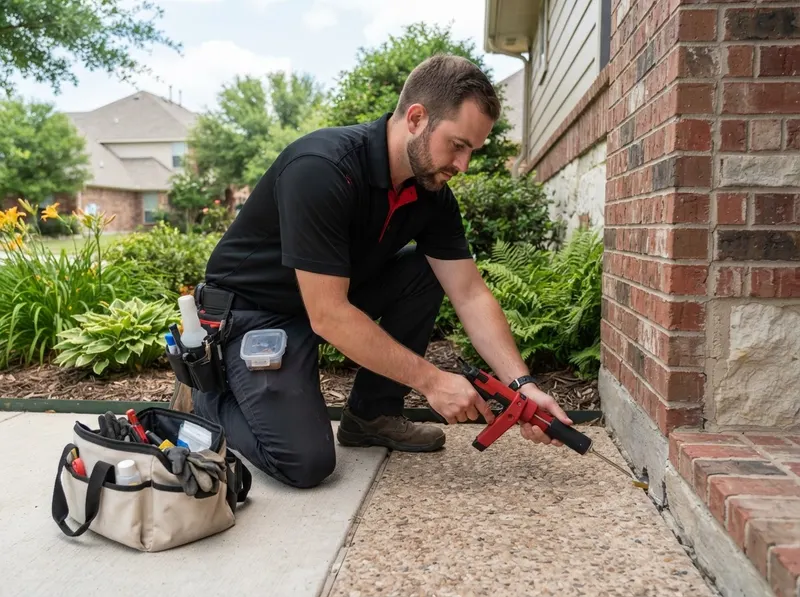
Biological baiting strategies target destructive red imported fire ants (Solenopsis invicta), tawny crazy ants, rover ants, and indoor-foraging odorous house ants. Instead of applying repellent surface sprays that agitate colonies and induce rapid budding into multiple satellite nests, technicians deploy species-appropriate carbohydrate and protein matrices infused with slow-acting insect growth regulators. Foraging worker ants carry the bait matrices directly back to underground nesting chambers, transferring the lethal chemistry through the colony hierarchy via trophallaxis to neutralize fertile queens. Technicians conduct granular broadcasting across expansive turfgrass, apply focused injections to perimeter electrical pedestals, and treat expansion joints to permanently arrest mound development across backyards and decorative borders.
Get a quote →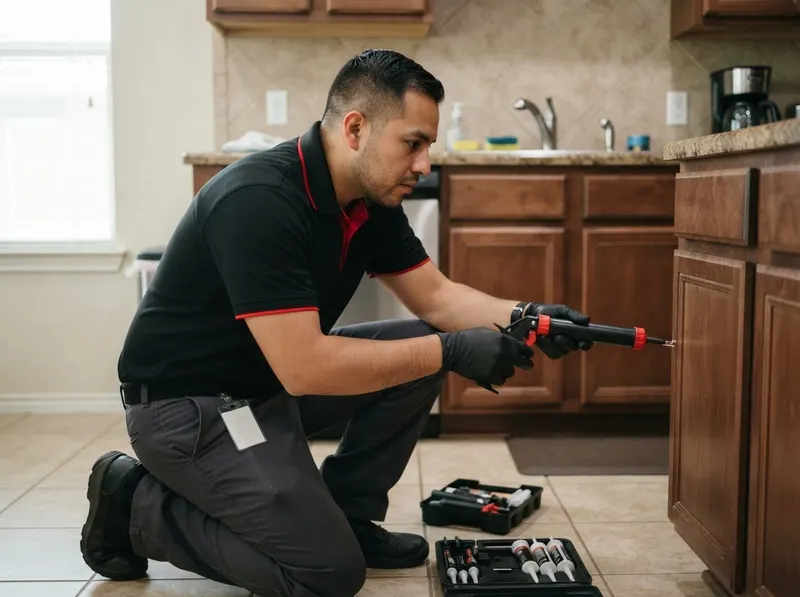
Intensive remedial programs eliminate stubborn infestations of German cockroaches (Blattella germanica) in kitchen zones and prevent massive American cockroaches (Periplaneta americana) from infiltrating living areas through subterranean utility pathways. Technicians execute deep-crevice vacuuming with HEPA filtration to immediately reduce aggregate biomass, followed by the surgical placement of non-staining abamectin or indoxacarb micro-gel baits within hinge pockets, under appliance motor housings, and along unsealed plumbing conduits. Insect growth regulators (IGRs) are introduced into hidden harboring voids to disrupt nymphal molting cycles and sterilize surviving adults. Detailed sanitation and exclusion guidance prevents ongoing moisture attraction around sink traps, ice-maker lines, and dishwasher drain hoses.
Get a quote →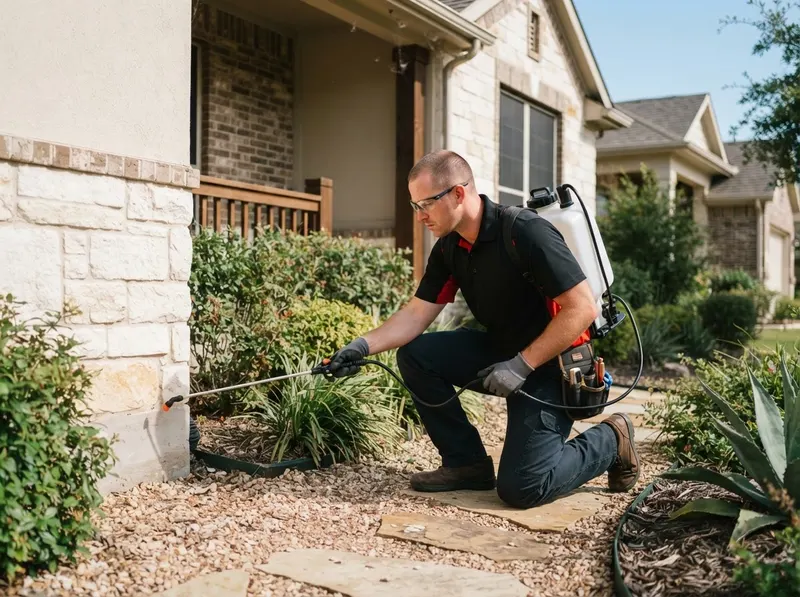
Tactical physical de-webbing combined with targeted harborage remediation neutralizes aggressive wolf spiders, brown recluses (Loxosceles reclusa), and black widows (Latrodectus mactans) harboring around residential properties. Technicians utilize extension poles equipped with electrostatic brushes to strip egg sacs and webbing from high eaves, covered patio ceilings, window perimeters, and outdoor kitchen utility cabinets. Micro-dust formulations are injected into dry, undisturbed voids such as stone veneer facade gaps, water meter boxes, exterior irrigation control enclosures, and crawl space access panels. Because spiders are predatory arachnids that enter structures primarily to hunt, eradicating their underlying insect food supply around foundation perimeters permanently collapses the spider carrying capacity of the property.
Get a quote →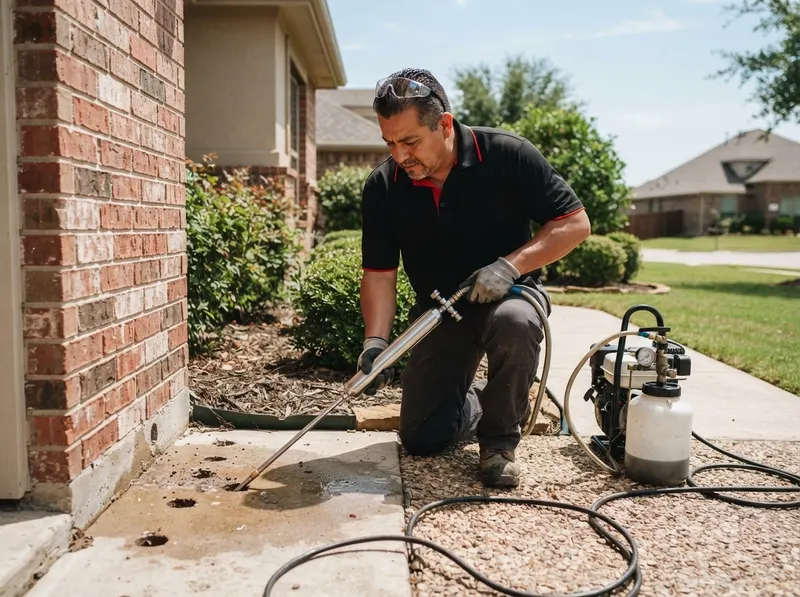
Continuous perimeter liquid chemical barrier installations establish an impermeable protective envelope around residential poured slab foundations. Technicians trench continuous 6-inch by 6-inch soil channels directly against exterior foundation beams, drill through abutting exterior concrete slabs such as patios, driveways, and front porches at calibrated 12-inch intervals, and inject non-repellent liquid termiticide solutions at high volume under controlled pressure. Subterranean worker termites contacting the treated soil zone fail to detect the chemical, inadvertently transferring the active compound to nest mates, brood, and the primary reproductive queen via physical grooming. This non-repellent approach completely eradicates the subterranean colony structure within 60 to 90 days, delivering long-term structural security backed by ongoing annual monitoring.
Get a quote →You get a firm, itemized quote for your pest control service before any work begins, no surprises, no pressure.
Careful prep, tidy work, and a full cleanup when we are done. We treat your home and belongings like our own.
The same trusted, background-checked team from the first call to the final check.
Selecting the correct pest management intervention demands an objective appraisal of target pest biology, structural construction style, and immediate nesting vectors. If subterranean termites or exploratory mud shelter tubes are visible along exterior grade slabs or interior garage stems, choose targeted liquid soil trenching or localized bait arrays; if broad lawn pests such as red imported fire ants, field crickets, or wolf spiders overrun surrounding turf, select targeted botanical or synthetic pyrethroid perimeter granular treatments. The trade-off centers on application permanence versus environmental breakdown: continuous liquid foundation trenching bonds termiticides to the soil profile for 5 to 8 years without daily maintenance, whereas surface perimeter bands and granular turf treatments degrade naturally under intense UV sunlight, hot seasonal winds, and frequent sprinkler cycles, requiring systematic quarterly re-applications.
If scratching noises, gnawed insulation, or droppings are discovered in the attic or utility chases, select permanent physical exclusion over ongoing toxic exterior bait stations; structural exclusion permanently blocks roof returns, eaves, and weep paths with 23-gauge or 19-gauge galvanized 1/4-inch steel mesh, preventing indoor rodent carcass decay and electrical fire hazards, whereas standalone rodent bait boxes simply thin the surrounding outdoor population while leaving structural access doors completely exposed. For sudden interior roach appearances, identify the exact species before applying chemistry: American roaches wandering out of municipal sewer lines require drain valve corrections and exterior perimeter interceptors, while German roach infestations inside kitchen cabinetry require targeted insect growth regulators, micro-gel baits, and harborage void dusts rather than general exterior sprays.
Every project gets a firm, written price after a free on-site visit. Ranges below for orientation.
Tell us about your pest control service job and we'll send a clear, written quote, usually the same day. Or just call and talk to a real Frisco pro.
(945) 439-4323
Frisco is situated directly over the expansive Austin Chalk and Eagle Ford Shale geological formations, a terrain characterized by deep, dense Houston Black clay that experiences violent volumetric changes between seasonal wet periods and scorching summer drought. During July and August, as ambient temperatures routinely climb beyond 100 degrees Fahrenheit, this black gumbo clay shrinks, pulling dramatically away from residential concrete slab foundations and forming deep subterranean ground fissures. These expansive soil gaps crack foundational tension lines, shear landscape irrigation mains, and create recessed thermal conduits that subterranean termites, field crickets, and American roaches navigate directly beneath protective brick weep screeds. Master-planned communities throughout Collin and Denton Counties, bordering dynamic recreational corridors near The Star in Frisco, Toyota Stadium, Riders Field, and the rolling green spaces of Frisco Commons Park and Central Park Frisco, experience persistent biological pressure as developing commercial zones disturb natural wildlife ecosystems. Displaced roof rats and field rodents use utility service lines and ornamental tree canopies bordering Dallas Parkway, Legacy Drive, and Preston Road as transit routes to infiltrate residential soffits, requiring structural defenses specifically designed for the region's shifting soils and architectural styles.
Free estimates for Frisco & the surrounding area.
 Prairie Fox Pest Control